Friday, July 12, 2013


Thursday, July 11, 2013
WV Leaders Ponder Tax Hikes
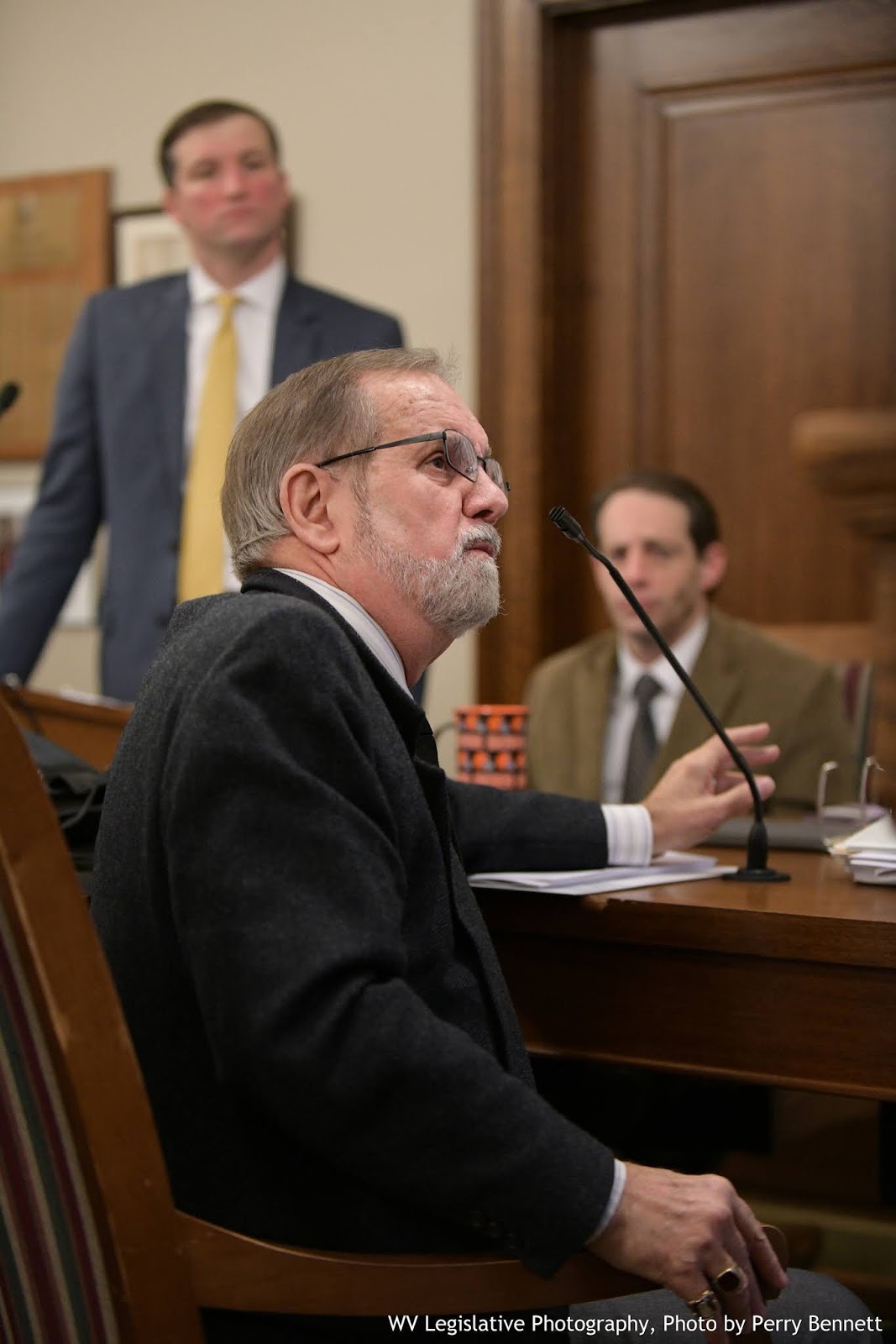
West Virginia Delegate Larry D. Kump's testimony at the "Blue Ribbon Commission" public hearing regarding taxation for highways and bridges, held on Thursday, July 11th, 2013, at the Comfort Suites in Kearneysville (unexpectedly moved from theHoliday Inn in Martinsburg):
Here we go again!
After years of legislative trench warfare, and nipping right on the heels of at long last abolishing West Virginia's cruel and regressive grocery tax, it truly is troubling that one of the first agenda issues of our government leadership is to parade a smorgasbord menu of ways for more taxing and spending, followed by an anticipated special session of the Legislature, to consider putting tax increases into law.
It is true that different states use somewhat different mechanisms to fund roads and bridges. It also is true that West Virginia is among a minority of states that manages both state and county roads and bridges. However, even with Maryland's increase of their gasoline taxes, just days ago, West Virginia still has the region's highest gasoline taxes, bar none.
Another fact is that there is a growing consensus realization that West Virginia is challenged with a need for better maintenance of roads and bridges, as well as for improvements to our transportation network.
In addition to the need for road improvements in just about every local area throughout West Virginia, two specific examples that immediately come to mind for me is the long delayed completion of "Corridor H", as well as improvements to Route 9 West of Martinsburg. In point of fact, I recently observed one bumper sticker, that proclaimed "I pray every day. I drive Route 9!".
West Virginia's road wish list is a long one.
However, let's not rush to surrender to an anxious clamor for increased taxes and spending, while merely giving lip service to vigorously investigating ways to reform our current practices and procedures.
All of this reminds me of me and my sister when we were children. Before every Christmas, we eagerly would go through the "Wish Book" (Sears & Roebuck catalog), circling all the toys we wanted for Christmas. Even so, we children were well aware that Mom and Dad couldn't afford to grant all of our childish wishes out of their almost empty pockets.
That also reminds me of a modern fable, illustrative of the perils of large bureaucracies, that was recently told to me by my friend and colleague, Delegate Marty Gearheart of Bluefield, WV.
As the story goes, there were two highway employees working on a median strip. One was digging holes. The other was following him and filling those holes back up. When asked what they were doing, both replied that they were dutifully doing their jobs, but admitted that there used to be three of them. One dug the hole, one planted the tree, and the other filled in the hole around the tree, but the tree planter was assigned to another job and nobody told the other two to do anything differently.
How does all of this apply to all of us taxpayers here and now?
If we are to maximize the efficient use of our highway tax dollars, now is the time to first consider and do things better, much better.
One good place to start is to ask rank and file highway employees, the ones who know most about field operations, for their analysis and suggestions, and to receive these ideas without filtering this honest feedback through various levels of management. Taxpayers also should be encouraged to chime in with their suggestions. Hopefully, this hearing today will only be the first step in an expanded and much intensified process to do just that.
Another recommendation is to begin a comprehensive and truly independent review of current West Virginia (and even federal) laws, procedures, and staffing by a team of accomplished management analysts. Their assignment should be to come up with a matrix of what is absolutely necessary for reasonably safe highway transportation, as opposed to what would be nice but just too much Champagne for our beer budget.
To do these things only would be prudent and practical, but, in closing, let me mention just three more of a multitude of suggestions that merit serious review.
Our current practice of government mandated and inflated salaries for private contractors' employees costs Mountaineers mountains of wasted tax money, not only for roads and bridges, but also for other public projects, such as libraries and such.
Also, the State of West Virginia is forfeiting a big bundle of revenue from far too many West Virginia residents, who drive vehicles with out of state tags and use out of state drivers' licenses. Not only does the West Virginia Department of Transportation lose lots of revenue from these unpaid tags and licenses under already established law, but our other government agencies also lose loads of personal property tax revenue. Accordingly, it would be helpful if the West Virginia Department of Transportation helped coordinate information about these scofflaws with our local county sheriffs and assessors, for follow-up action by them. For those who doubt that this is a problem in our area, I invite you to just stop by one of our local elementary schools during school days and count the out of state license tags of parents dropping off and picking up their kids from school.
Finally, with the boom of Marcellus shale and oil revenue in West Virginia, let's consider dedicating a fixed percentage of that new state income to our roads and bridges, and, although ithis does not relate to our roads and bridges, let's also investigate the Alaska example of returning a fixed percentage of this income directly to taxpayers.
You know, I've never much liked that West Virgina slogan of "Open for Business". To me, it sent the message, "Open for Business...as Usual".
West Virginia's many years of doing business as usual in regard to our system of taxes and regulation is what puts us in competition with Mississippi for the dubious distiction of the State with the poorest people in the nation.
We deserve better, much better.
Wednesday, July 3, 2013
Chuck Chimes In
Thanks for devoting so much of your time and energy to preserving what so many gave their lives for.
I'll be pleased to vote for you again!
Chuck Aston
Thursday, June 20, 2013
Byrd Whisperings

Ah, well, I hope and pray that you decide to be a candidate for re-election in 2014 to the West Virginia House of Delegates.
I also hope that my experiences with other legislators are as informative (really hard to come by) and communicative (even harder) as mine have been with you.
It gives me warm fuzzies knowing for sure that at least one of my representatives actually is listening.
If I had a say-so, I'd keep you around just for that.
...
Ed Byrd
Saturday, June 8, 2013
Electrifying News...
It is a duplication of my original May 23rd suggestion to First Energy (parent company of Potomac Edison and Monogahela Power), also posted on this website, ("Inquiry to the Power Company" entry of May 23rd, 3013).
Delegate Larry D. Kump
Tuesday, June 4, 2013
Investigation of Power Companies
For more information on how to file a complaint with the West Virginia Public Service Commision, telephone 1-800-642-8544.
Delegate Larry D. Kump
Thursday, May 23, 2013
Inquiry to the Power Company
Having intently monitored the public pandemonium regarding the recent residential electricity billing snafu, but also wanting to avoid meaningless political posturing, there nevertheless are two issues of concern to me regarding this dilemma on which your feedback would be appreciated.
First, while I believe I have a basic understanding of some of the problems that have been inherent in billing cycles and the lack of physical meter readings, could you please advise me of the underlying cause as to why so many have reported estimated billings of such egregiously elevated amounts? It simply seems to me, as a non-expert in this field, that there has yet been put forth an easily understandable cause by First Energy/Potomac Edison as to why some of these estimated billings have been elevated much more than a prudent person can fathom. Can you shed further light on this conundrum?
Secondly and in regard to the actual reading of the meters, would it be prudent and possible for both your company and the consumers to initiate a more expanded voluntary consumer meter reading program, wherein consumers could be given more encouragement, regularly could self-report their meter readings, and perhaps even be given a discounted electric rate for their participation?
Delegate Larry D. Kump
West Virginia House of Delegates District #59
Berkeley-Morgan Counties (Eastern Panhandle)
Footnote: Although there currently is a place on electric bills wherein customers are instructed how to make their own meter readings, there is no financial incentive for them to do so.
Saturday, May 11, 2013
Contractors Commend Kump
Dear Delegate Kump,
On behalf of the Contractors Association of West Virginia, I want to commend you for your work in this year's legislative session.
We especially appreciate your willingness to give me and our members the opportunity to share our thoughts and concerns on legislation affecting the construction industry in West Virginia.
You can be proud of the investment you have made to provide a brighter future for West Virginia.
Again, thank you for your efforts...
Sincerely,
Mike
(Michael L. Clowser)
Executive Director
Contractors Association of West Virginia (CAWV)
Monday, April 22, 2013
More 2013 Session Afterthoughts
Even with a reconvened "special" session of the Legislature by the Governor, he mandated that the business of that session be restricted to just a scant handful of non-emergency and narrowly focused proposals, that previously failed to pass the just adjourned regular legislative session.
The prison legislation was helpful in that it expanded the drug courts, but it also failed to address the major issues of sentencing and prison overcrowding that gives West Virginia the highest rate of incarceration in the country.
The education legislation included some good stuff, but mostly nibbled around the edges of our ongoing education crisis and did not take much of a bite out of our problem of too much bureaucratic control over our local schools by the State Department of Education. It simply did not empower local school boards and parents to be more engaged on behalf of our children.
Municipal Home Rule legislation was a step forward, and it also included some important protections of our Constitutional 2nd Amendment rights. A further step forward would be to further encourage voter participation, by requiring municipal elections to be held at the same time as state and federal elections. This also would save tax dollars.
However, little progress was made in improving our judicial process and reforming our state government taxing and regulation.
We should and must stem the flight of West Virginians to other areas, as they desperately search for good jobs and prosperity for themselves and their families.
Thursday, April 18, 2013
Here We Go Again

Meanwhile, major economic issues, affecting the prosperity of all of us here in the Mountain State, continue to lie on the legislative table and remain unaddressed.
For more of this about that, read the other entries at this website.
Wednesday, April 17, 2013
Pondering the Possibility of a Special Session
Monday, April 15, 2013
2013 Legislative Session Afterthoughts
The 2013 Regular Session of the West Virginia Legislature ended a few minutes past Midnight on Saturday night, and the Session on the Governor's state budget proposal is scheduled to be completed this week.
To that end, it's important to note that the ability of our state government to make ends meet will be affected more and more by what is going on in Washington, D.C..
While many Mountaineer citizens are unhappy with some forced cutbacks in services and frustrated with the lack of new and expanded programs, we also must be prepared to deal with what some are calling "the most predictable economic crisis in our history".
According to our "numbers crunchers" down here in the State Capitol, approximately four billion out of the eleven billion dollars in our state budget now is dependent on federal funding (over 36%).
However, the most recent report of the Government Accountability Office and the Comptroller General of the United States warns us that, "...comprehensive long-term fiscal projections show that- absent policy changes - the federal government continues to face an unsustainable fiscal path.".
What that means is, when necessary and painful budget changes inevitably are made in our federal government spending and programming, that also will mean that the already diminishing federal funding available to us here in West Virginia also will continue to decline, and not just by small amounts.
During this session of the West Virginia Legislature, we had to make some cuts in order to meet West Virginia state government's growing financial challenge, but that only took care of this year's coming budget.
What about the following years?
Just as we citizens have to prudently manage our personal family incomes, we also have an obligation to make sure that elected officials are wise stewards on behalf of all of us taxpayers and our families.
During this legislative session, I ruefully saw numerous groups and organizations persistently plead (and sometimes demand) more programs and services. Some even unabashedly asked for tax increases on all of us. Many, if not most, of them paint heart-rending scenarios if their proposals are un or under funded.
Obviously, a Mom and Dad should not gather together their children, announce to them that their family income has decreased, and tell them that, "We're going to have to let one of you go!".
And, so it also should not be with the State of West Virginia and our families.
Now is the time to hold all elected officials accountable for our stewardship, and not send us further down the road to higher taxes and more initiative destroying entitlement programs.
Instead, let's work together to liberate our Mountaineer economy and families.
We can and must do this.
For more information about what has happened in the West Virginia Legislature this year, visit www.legis.state.wv.us, and also check out the other entries at this website for my legislative commentaries.
Saturday, April 13, 2013
Best in the House!

Delegate Larry D. Kump,
Drug Courts &. Prison Reform
 | House passes prison legislation - journal-news.net | News, sports, jobs, community information for Martinsburg - The JournalSource: journal-news.net CHARLESTON — In an 81 to 17 vote, the West Virginia legislature Friday morning passed a prison overcrowding bill after much debate from House member... |
Friday, April 12, 2013
Will Beretta Come to West Virginia?
Click on the link below for the orginal newspaper story on this issue: Note: Please also see the previous entries at this website about this issue, "Bertta's Response" and "Dear Beretta".
Thursday, April 11, 2013
Beretta's Response
Thank you very much for your kind letter of February 27, 2013.
We appreciate your expression of interest in having the Beretta companies in the U.S. move to your region; however, we are not entertaining invitations of that type at this time but instead are focused on the legislative debate pending in Maryland relating to potential firearm and firearm magazine bans. Only after that debate is resolved and the impact of pending legislation on our companies is known will we evaluate what further steps, if any, our companies need to take in that regard. Certainly if our business interests require that we expand or relocate part of our operations elsewhere we will consider West Virginia in that regard.
Sincerest regards,
BERETTA U.S.A. CORP.
Jeffrey K. Reh
General Counsel and Vice-General Manager
17601 Beretta Drive
Accokeek, MD 20607
Note: Please see my original "Dear Beretta.." letter, entry of February 27th, 2013, at this website.
Dear Beretta...
Mr. Jeffrey Reh, General Counsel
Beretta USA
17601 Beretta Drive
Accokeek, MD 20607
Re: West Virginia Welcomes You!
Dear Mr. Reh,
West Virginia, known throughout our nation for our respect and
reverence of the 2nd Amendment, should be Beretta's first choice for
relocation from the less than friendly environment you currently endure in Maryland.
Here in the Eastern Panhandle of West Virginia, we are in close
proximity to our nation's Capitol and also at a nexus of superior
transportation routes.
Please bring Beretta's operations here to our open arms, where
your company and your employees will savor our family friendly atmosphere, excellent technical training resources with the Blue Ridge Technical College, and pleasantly affordable cost of living.
Looking forward to hearing from and working with Beretta, I remain,
Working together to stay independent,
Delegate Larry D. Kump
LDK/lc
Friday, April 5, 2013
2013 Legislative News #8
Now, in the remaining days of this first session of 81st Legislature, the House of Delegates and the Senate will concentrate their efforts on consideration of legislation already passed by the other chamber.
This session will end shortly after Midnight on Saturday, April 13th, but then we will reconvene the following week to vote on the West Virginia State Budget.
Meanwhile, West Virginia Senate leaders continue to express reluctance to even have committee hearings on the numerous 2nd Amendment protection proposals passed by the House of Delegates, and that dynamic will continue to be watched closely by Mountaineer citizens.
Also, and in the House of Delegates this week, a few bills had passed their respective committees and were scheduled for votes on the last day for their consideration (Wednesday. April 3rd), but were pulled from the voting calendar at the last minute by the House Democrat leaders. It is speculated by many that this was done because these leaders ruefully realized that these bills simply would not receive enough votes for final passage from the House of Delegates.
One of these bills was HB 2946.
HB 2946 would have expanded the hours in which alcoholic beverages could be served on Sundays.
My position on HB 2946 was and is that booze is bad, but that public boozing is even worse.
Now, my political views are much more libertarian in nature than politically partisan, mostly because I believe that our personal behavior which doesn't harm others simply should not be the concern of government.
However, that just is not the case with public boozing.
West Virginia is my residence of choice and I love it dearly, but many outside of our mountain refuge sadly visualize our homeplace as filled with strip clubs, gambling dens, and rowdy bars.
So and with HB 2946, here we go again.
HB 2946 was not just about commerce.
Booze has a devastating effect upon our society and families, but it also dramatically adds to death and carnage on our highways.
Now,and on an intensely personal note, some of you know about my conversion to my faith many years ago.
Very few others know that one happy side circumstance of my religious conversion was that, among other things, it rescued me from the ravages of alcoholism, and I haven't had a drink of that stuff since February 22nd, 1969.
I love capitalism and the free market, but let us not allow enteprenurial greed to blind us from prudent public policy.
Pulling HB 2946 from the House of Delegates voting calendar was a sober deliberation and decision.
Wednesday, April 3, 2013
MARC & Home Rule Updates
http://www.herald-mail.com/news/tristate/hm-wva-senate-oks-tax-credit-for-e-panhandle-commuter-rail-service-20130402,0,4093939.story
Monday, April 1, 2013
2013 Eastern Panhandle News #8
Our caucus meeting guest was West Virginia Transportation Secretary Paul Mattox, who also updated us on area road projects and fielded questions.
Secretary Mattox glumly announced that there currently are no new roads planned for West Virginia, including no improvements to Rt. 9 West of Martinsburg and Rt 522 in Morgan County, due to a serious lack of funding.
He explained that the aging and static population of West Virginia contributes to this problem, as well as the rising cost of road construction and our mountainous terrain.
According to the Secretary, West Virginia is hard put to even manage the decline of our current state road system, with repaving now on a twenty-eight year cycle, instead of the recommended twelve year cycle. He went on to say that "tar & chip" now even is being used on state road maintenance, instead of the more costly and more durable asphalt, and that the average age of our bridges is fifty years.
Mr. Mattox cited a current budget of $710 million, but said that another $750 million is needed just to properly maintain our existing state roads, and another $380 million would be needed for proposed new projects (It costs $200,000 per mile to build a new road).
He admitted that West Virginia already has one of the highest gasoline taxes in the country, even though that tax has not changed for the last ten years.
In response to concerns raised by Delegate Kump about driver safety issues on the I-81 construction at the Marlowe/Falling Waters exit, the Secretary promised to investigate that issue. He also confessed that an I-81 "bottleneck" will remain at the I-81 bridge over the Potomac River and beyond, since Maryland owns the Potomac River and is responsible for I-81 from that point northward into Maryland.
Meanwhile, the Governor has a "Blue Ribbon Committee" investigating our Mountaineer highways, and it is speculated that a special session of the Legislature might be called during this Summer to address this problem.
Emergency Legislation Introduced Today
HJR 66 Amending the West Virginia Constitution by removing "Pursuit of Happiness"- to Constitutional Revision and then Judiciary.
HJR 67 Amending the West Virginia Constitution by abolishing the West Virginia Senate- to Consitutional Revision and then Judiciary
HB 3219 Requiring the Department of Transportation to fund and construct at least fifty (50) new bridges each year, solely for the Legislature to name on behalf of constituents- to Veterans Affairs and Homeland Security and then Finance.
HB 3220 Prohibiting the sale of elected and appointed officials to the lowest bidder- to Judiciary and then Finance.
HB 3221 Declaring April 1st an official state holiday, but only for certain elected and appointed officials- to Government Organization and then Finance.
HB 3222 Authorizing the Lottery Commission to promulgate legislative rules relating to wagering on the outcome of ethics commission and attorney general opinions- to Finance and then Judiciary.
HB 3223 Authoring the Secretary of State to promulgate legislative rules relating to the optional counting of ballots and the use of alternative mathematical principles for tallying election results generally- to Political Subdivisions and then Judiciary.
HCR 666 Establishing water as the official West Virginia state liquid- to Rules.
For those who don't understand the above, please consider the April 1st date of this entry's posting.
Thursday, March 28, 2013

Wednesday, March 27, 2013
My "Crossover Day" Deadline Deliberations
As the "Crossover Day" deadline looms large this coming week, for the West Virginia Legislature to pass legislative proposals (bills) out of the originating chambers (House of Delegates and Senate), it seemed prudent for me to pause and ponder anew this reminder from Valley Forge that helped persuade me to serve as a citizen legislator.
The spirit of a lone soldier in George Washington's Continental Army stands barefoot in the freezing snow. Shivering in rags, hungry, and blood-stained from battle; he holds his battered musket in bandaged hands.
There's fire in his eyes.
Looking over 200 years into the future, he tells all of us today,
"I gave to you a birthright of freedom, now enshrined in your Constitution, but your children graduate from high school too careless to read it. I fought in the icy winter, without shoes and with bloody feet, to give you the right to vote, but you stayed home on election day. I left my family destitute and hungry, so you could have the freedom to stand up and speak out for liberty, but you remain uninvolved. I orphaned my children, to give you a government endowed by God, but you have sat back and allowed others to hijack our rights and responsibilities."
And so, while the West Virginia Legislature remains in session, it nevertheless continues to remain up to each and every one of us, me and you together, to work to preserve our precious heritage of freedom, for which so many others have sacrificed so much.
Footnote: Please also take a moment to click on the "Why It Matters" as well as the other links listed under "Videos" on the right hand side of this website.
Monday, March 25, 2013
2013 Eastern Panhandle News #7
The Maryland Area Regional Commuter (MARC) train legislation (SB 103, HB 2879) was reported on by the Reverend J. Charles Riecks, National Association of Railroad Passengers spokesperson.
He reported that MARC has been serving the Eastern Panhandle of West Virginia since 1983, but West Virginia never has had a voice in its operation.
SB 103 and HB 2879 would allow West Virginia to enter into an Interstate Compact agreement with Maryland and give West Virginia a voice on behalf of the Mountaineer commuters who use MARC to travel to and from their jobs.
Approximately 450-500 West Virginia commuters board the MARC trains in West Virginia (not counting the additional West Virginians who board the MARC train in Brunswick, Maryland to catch the much earlier MARC train to Washington, D. C.).
Mr. Riecks suggested that, with MARC service to West Virginia, West Virginia would have to create additional road and bridge capacity for the increased automobile traffic.
Both SB 103 and HB 2879 are pending consideration by the Finance committees in the House of Delegates and the Senate.
A representative of the West Virginia Department of Transportation and also Attorney General Patrick Morrisey will be invited to upcoming meetings of the Eastern Panhandle Legislative Caucus.
Beginning next Monday, the Eastern Panhandle Legislative Caucus meetings at the State House will begin at 8:30 AM.
Meanwhile, click on "A Budget Solution for You & Me" under the "Video" links on the right hand side of this webpage.
Thursday, March 21, 2013
2013 Legislative News #7
Left unresolved and still a problem is the lack of direct accountability of the West Virginia State Board of Education to Mountaineer voters and the continuing problem of too much top heavy bureaucratic authority over local schools.
The needs of students and the voices of parents will be much better served if we provide much more voter ownership of our educational system by making the members of the West Virginia State Board of Election accountable to voters in non-partisan General elections (HJR 35 - Constitutional Revision Committee), and moving the non-partisan local county school board elections from the Primary to General election (HB 2555 - Education Committee).
Further, SB 359 weakens the employment qualifications of the State Superintendent of Education, and removes the cap on his salary, even though he already earns more than the West Virginia Governor.
Until 1932, the State Superintendent of Education was an elected official, but now is appointed by the State Board of Education (who also aren't elected, but appointed by the Governor, and who has no authority over them after their appointments).
The State Superintendent of Education also is the only unelected state official who serves on the State Board of Public Works (Serving on the West Virginia Board of Public Works are the Governor, Secretary of State, Auditor, Treasurer, Attorney General, Commissioner of Agriculture, and the State Superintendent of Education).
Sadly, SB 359 is full of sound and fury, signifying not so much (apologies to Shakespeare's "Macbeth").
Legislative Process Footnote:
The deadline for introducing new legislative proposals (bills) is only a few days away. Further, committee voting on bills introduced must be completed in the originating chamber by the end of this month. Each chamber (House of Delegates and Senate) must complete voting on bills in the originating chamber by April 3rd. Then, each chamber will turn their attention soley to discussing and voting on bills that already have been passed in the opposite chamber.
Monday, March 18, 2013
2013 Eastern Panhandle News #6
The Reverend J. Charles Riecks, National Association of Railroad Passengers, was to be the guest speaker for this meeting. He had intended to answer questions about SB 103 and HB 2879, in regard to the proposed participation by West Virginia in the Maryland Area Regional Commuter (MARC) train system, which currently serves the Eastern Panhandle of West Virginia.
SB 103 and HB 2879 are the legislative bills that address this issue. Both bills have been passed by the Transportation Committees in the House of Delegates and State Senate. Both bills currently are awaiting further committee hearings before the House of Delegates and State Senate Finance Committees.
Visit the other entries at this website for more legislative news.
Focus and Civility

The intemperate statements, allegedly directed against the personal safety of West Virginia State Senator Herb Snyder (D-Jefferson County), are both alarming and churlishly counterproductive to good governance and civil discourse.
Of course, the 2nd Amendment to our United State Constitution resonates deeply within the hearts and sinews of Mountaineers.
We are understandably and deeply passionate about our right to keep and bear arms.
However, as the West Virginia State Senate prepares to further deliberate and decide how to best protect our God given and Constitutional rights and responsibilities, we all need to keep our focus solely upon the important principles and issues now being considered by the West Virginia State Legislature.
Even so, let us not also be led astray into believing the inflamed outbursts of a feckless few represent the mind of the many, who anxiously are striving to preserve our sacred liberties.
To do so would be akin to painting all of Christendom with the brush strokes of those such as David Koresh and the Reverend Jim Jones.
Wednesday, March 13, 2013
Thoughts about SB 371 (Criminal Justice Reform)

The following are my thoughts that I shared with other leaders about the above referenced legislative proposal on post conviction criminal justice:
The American Correctional Association (ACA) Page 8, lines 7 & 8
Giving broad and absolute authority to the American Correctional Association (ACA) to establish West Virginia Division of Corrections mental health guidelines would surrender West Virginia's jurisdiction and authority to an unaccountable outside organization. I suggest that the ACA not be given authority or jurisdiction in this legislation. Their expertise can be utilized as suggestions without giving them authority. (I can amplify further on this. This is a major concern)
Child Abuse, Page 11, beginning on line 16
Any early release, including parole, of any person convicted of child abuse (or abuse of a vulnerable person) seriously endangers public safety. Those committing these heinous crimes should never be eligible for accelerated release or parole, inasmuch as their danger to public safety is ongoing. These felons, while not a large percentage of prison populations and usually not a behavioral problem while incarcerated, nonetheless constitute a clear and present danger to the public upon their release from incarceration.
Parole Officers Self-Defense, Page 15, lines 16-17, Page 54, lines 15-24
Allowing parole officers to carry concealed deadly weapons simply is prudent policy.
Risk & Needs Assessments , Page 19, line 21, Pages 24-25, Page 29, line 18, Page 31, lines 18-24, Page 32, line 4, Page 36, lines 5-8 and lines 18-19, Page 46, line 18, Page 53, lines 6-11, Page 57, lines 14-15, Page 65, lines 5-7
Care should be taken to not create a burdensome bureaucracy with this process. Many jurisdictions have become so enamored with complex assessments that the assessments actually have become counter-productive to positive outcomes. There is a real danger that administration of these assessments will consume too much of the time that criminal justice employees should be spending in more productive ways. Suggest streamlining this criteria by simply mandating that it should be "cost and time effective" and that reports about programs be "outcome based", to help forestall the temptation of agencies to simply tout the number of programs and participants as indicators of success.
Community Corrections Subcommittee, Page 22
I would suggest that a prison case manager (non-supervisor) also serve on this subcommittee, inasmuch as it is this line position that has a tremendous insight into effective programming and need.
Community Criminal Justice Boards/Substance Abuse Treatment, Page 27, lines 1-2, Page 68, lines 12-17
The definition of a member "with a background in substance abuse treatment and services" should be further clarified to emphasize the principle that preference shall be given to the appointment of an individual with successful direct experience with abusers in abuse service and treatment and without regard to formal education. It has been my sad experience that abuse treatment can become a "cottage industry" for degreed professionals, while the most effective abuse counselors are those who have had personal and real world experience in overcoming addictions. In prison environments, often the most effective mentors are those who can relate to the abusers by showing them how they overcame their own abuse addictions (including fellow inmates). The Twelve-step Alcoholics Anonymous and Narcotics Anonymous are two good program examples. Also, inmates often use addictions programs merely as tools to "game the system" and to glean certificates of completion for parole and release purposes, but without merit.
Random Drug & Alcohol Testing, Page 30, lines 15-16
Another good tool.
Violation of Probation, page 37, lines 15-17, Page 38, lines 5-7
The focus of violations of probation on absconding from supervision or committing a new crime, instead of other minor issues perhaps is the most excellent recommendation to reduce bureaucracy and counter-productive criminal "justice" in SB 371. However, I would suggest that the penalties for minor probation violations be even more lenient and less structured.
Home Plans & Jobs, Page 43, line 18, Page 52, lines 5-24
These provisions are most welcome. A major problem with release from incarceration is lack of the ability of inmates to find a home plan or to become employed and productive members of society.
State Parole Officers Imprisonment Authority, Page 54, line 12, Page 59, lines 4-19
Giving parole officers the right to imprison, without approval of the court, really worries me.
Drug Courts (Drug Offender Accountability and Treatment), Page 64
Drug courts have been an effective tool, tremendously reducing recidivism (as well as prison costs), and should be supported and expanded.
Finally, much more should be attempted to address West Virginia's prison problems, in addition to the above suggestions regarding SB 371.
Monday, March 11, 2013
2013 Eastern Panhandle News #5
Berkeley County Councilperson Jim Whitaker also participated in the meeting.
West Virginia Supreme Court Chief Justice Brent Benjamin made a presentation on both adult and juvenile West Virginia drug courts, and an intense discussion with the legislators and Councilperson Whitaker followed.
Also and previous to and after the meeting, Delegate Kump and Senator Cook had a personal discussion about SB 371 and other criminal justice issues.
Next week, the caucus hopes to schedule a presentation and discussion regarding the pending Maryland Area Regional Commuter (MARC)legislation on behalf of MARC commuters from West Virginia.
Please visit the "Journal Legislative News #3" and other entries at this website for additional legislative news and views.

Friday, March 8, 2013
2013 Legislative News #6

West Virginia Delegate Larry D. Kump, District #59 (Berkeley-Morgan Counties) has been carefully watching the proposed legislation on education as it is debated in the West Virginia State Senate. After the Senate works its will on this legislation, the Falling Waters Delegate will carefully scrutinize the amended version when it comes up for a vote in the House of Delegates. However, he laments that the Governor's proposed legislation on education reform falls short of doing enough to reduce State Board of Education bureaucracy and empower local school boards, as well as the teachers' ability to be effective in their classrooms. He also believes that further citizen participation and "ownership" of education, through increased voter participation, would be much improved by moving county Board of Education elections from the Primary to General elections (HB 2555).
On the issue of bar closing times in the Eastern Panhandle and the problems they create by encouraging over indulgent boozers from Maryland and Virginia to bring their rowdy and dangerous behavior to West Virginia, Kump believes that the most effective and straightforward solution would be to empower individual West Virginia counties to set their own rules and regulations regarding alcohol consumption, as is done in other States. He will be introducing legislation to do just that, as well as making these rules and regulations subject to voter referendums.
Other legislative bills being sponsored or cosponsored by Delegate Kump are:
HCR 51 & HCR 61 Our State & Citizen Rights (Rules Committee) Requests the Joint Committee on Government and Finance to establish a post session Interim Study on the impact of federal laws and regulations upon the sovereign rights of the State of West Virginia and our citizens, as protected by the Tenth Amendment to the United States Constitution.
HB 2594 Teaching Our American Heritage (Education) Would require schools to teach about the Declaration of Independence, our Constitution and Bill of Rights, and other relevant historical documents and events from the era of our Founding Fathers.
HB 2828 Protecting Vulnerable Children (Judiciary) Would make it a crime to solicit a child to enter a vehicle in order to commit an offense against that child.
HB 2871 Drivers' License Reform (Judiciary) Would remove the mandatory requirement for Mountaineer citizens to submit to the arcane and stifling regulations that make it so difficult to obtain new and renewed West Virginia driving licenses. This measure was passed in previous legislative session by the West Virginia Senate, but never approved by the House of Delegates.
HB 2882 Budget Reform (Finance) Would reduce West Virginia budget expenditures by one percent (1%) each year for ten (10) successive years.
HB 2884 Freedom of Information Act (FOIA) Reform (Judiciary) Would reform the West Virginia Freedom of Information Act (FOIA) to remove loopholes and make it easier for West Virginia citizens to ask for and obtain information and accountability regarding what our West Virginia government agencies are doing.
All bills first must be heard and voted upon in their assigned legislative committee before receiving further legislative consideration (Committee assignments are listed after each bill number and title above).
More information on legislative issues and other legislation sponsored and cosponsored by Delegate Kump is available at other entries at this website.
For information on bills not listed at this website and which legislators are assigned to which committee (and how to contact them), click on the "WV State Legislature" link under "Links" on the right hand side of this webpage.
Monday, March 4, 2013
2013 Eastern Panhandle News #4
Guest participants were Scott Swaim and Kurt Fuchts from West Virginia Farm Credit.
There was a spirited discussion about education reform. Delegate Kump lamented that the proposed legislation from the Governor does not sufficiently reduce the bureaucracy and control of the State Board of Education and suggested that the proposed legislation needs to do more to empower local county boards and local teachers.
The consideration of adult drug courts for the Eastern Panhandle was broached. Delegate Eric Householder will follow up and do additional research.
There was discussion of HB 2720 (bar closing times). Delegate Kump suggested that the best solution to this issue would be to give the authority to individual counties to regulate alcoholic beverages and that proposed county regulations should then be subject to a voter referendum in the following general election.
The Workers' Compensation coverage cost problem for volunteers at local fire departments was discussed.
HB 2723 by Delegate Larry Faircloth would institute a five percent (5%) surcharge on bail bonds (to be paid by those getting the bail bonds) to help fund regional jails and state police operations.
Additional legislative news is reported in other entries at this website. For even further information on other bills introduced and the legislators who are assigned to the committees with responsibilities for these bills, click on the "WV State Legislature" link under "Links" on the right hand side of this webpage.
Saturday, March 2, 2013
2013 Legislative News #5
The Falling Waters Delegate's recent letter to the Beretta firearms company national headquarters in Maryland, suggesting to them that they relocate from that anti-personal liberty state to the much friendlier Eastern Panhandle of West Virginia, has caught the attention of the Maryland State Legislature. Maryland State Senator Christopher Shank (R-Washington County) has asked West Virginia Delegate Kump for permission to read his letter aloud during a session of the Maryland State Senate.
Additional legislation being sponsored or cosponsored by Delegate Kump includes, but is not limited to:
HCR 51 Our Citizen & State Rights (Rules Committee) Requests the Joint Committee on Government and Finance to establish a post session Interim Study on the impact of federal laws and regulations upon the sovereign rights of the State of West Virginia and our citizens, as provided by the Tenth Amendment to the United States Constitution.
HB 2594 Teaching Our American Heritage (Education) Would require schools to teach about the Declaration of Independence, our Constitution and Bill of Rights, and other relevant historical documents and events from the era of our Founding Fathers.
HB 2728 Parking for Disabled Veterans (Veterans' Affairs and Homeland Security) Would allow any veteran with a disabled veteran automobile license plate to park in handicap parking spaces.
The above are only some of the proposals that he has and will yet introduce in the West Virginia Legislature (see other entries at this website). All bills first must be heard and voted upon in their assigned legislative committee before receiving further legislative consideration. (Committee assignments are listed after each bill number and title above). For information on other bills introduced and which legislators are assigned to which committee, click on the "WV State Legislature" link under "Links" on the right hand side of this website.
Tuesday, February 26, 2013
2013 Eastern Panhandle News #3
Over my ongoing protests, the West Virginia Senators and Delegates in the bi-partisan Eastern Panhandle Legislative Meetings previously decided to revise our previous practice and keep a portion of our weekly Monday meetings closed to the public and confidential.
However, my position is and always has been that our Eastern Panhandle legislator meetings should be ever so transparent and consistently open to public scrutiny and participation.
*Friday, February 1st: the 2013 Session organizational meeting of the Eastern Panhandle Legislative Caucus, Holiday Inn, Martinsburg, West Virginia.
Postscript: "Vox Populi est Vox Dei!"
Monday, February 25, 2013
2013 Eastern Panhandle News #2
Don Cookman, Craig Blair, John Unger, and Herb Snyder.
Issues discussed by the caucus, but not limited to, included:
* Education. Concern was expressed by some legislators about mandates from Charleston that restrict county school boards' autonomy. Higher education issues, as well as Board of Education elections (HB 2555), were included in the discussion.
* The possible impact of the recent State Supreme Court overturning of the mandate for the Kanawha County Board of Education to provide a specified amount of funding to their local libraries and how that would affect other county libraries, especially in Berkeley County.
* Problems with the tremendous differential between the cost of housing in the Eastern Panhandle and some other regions of West Virginia, especially in regard to the salaries of state employees and teachers.
* The possibility of another circuit and family judge for the Eastern Panhandle.
* The Common Interest Ownership Act (Homeowners' Associations) legislative proposal, which still is pending introduction but will be forthcoming.
* The possibility of a formal agreement with the Maryland Area Regional Commuter (MARC) train which would give West Virginia a voice in the MARC operating decisions.
* Bar closing hours.
* Local home rule for cities and counties.
Wednesday, February 20, 2013
2013 Legislative News #4
HJR 28 Taxpayer Bill of Rights (Constitutional Revision Committee) Would amend the West Virginia Constitution to require a two-thirds vote of the Legislature to increase the General Fund of the state budget and for excess taxes collected to be returned to the taxpayers.
HB 2489 Elected Officials Accountability (Judiciary Committee) Would provide that elected public officials or public employees found guilty of misconduct while in office or employed to forfeit their positions.
HB 2555 County School Board Elections (Political Subdivisions Committee) Would change the election of county school boards from Primary to General elections (ensuring more voter participation).
HB 2556 Reduction in Small Town Expenses (Political Subdivisions Committee) Would reduce newspaper printing expenses of financial statements for Class IV municipalities (Such as the Town of Hedgesville).
HB 2557 Whistle-Blowers (Energy, Industry and Labor, Economic Development and Small Business) Would give state employees, who "blow the whistle" on wrong-doing in government, the protection of a grievance procedure and also fine those who harass whistle-blowers.
HB 2560 Self-Defense Rights in Schools (Education) Would allow school administrators, who have proper permits, to carry a concealed weapon on school grounds.
HB 2565 Ballot Access (Judiciary) Would enhance the ability of minor political parties to get on election ballots.
HB 2568 Non-Partisan Election of Judicial Officials (Constitutional Revision) Would provide an "advisory only" voter referendum on whether or not judges and magistrates should be elected on a non-partisan basis.
HB 2872 Firearms while Hunting or Fishing (Judiciary) Would protect the rights of hunters and fishers to carry unloaded firearms.
HB 2575 Prevailing Wages Rates Reform (Energy, Industry and Labor, Economic Development and Small Business) Would require "prevailing wage" rates on public construction to be determined solely by wages within the county.
HB 2576 Eliminate Prevailing Wage Law (Energy, Industry and Labor, Economic Development and Small Business) Would eliminate the current West Virginia "prevailing wage" law.
The above are only a few of the bills that have been and will be introduced in the West Virginia Legislature (See other and future entries for more). All bills first must be heard and voted upon in their assigned legislative committees before receiving further legislative consideration (Committee assignments are listed after each bill number and title above). For information on other bills introduced and which legislators are assigned to which committees, click on the "WV State Legislature" link under "Links" on the right hand side of this webpage.
Monday, February 18, 2013
2013 Eastern Panhandle News #1
Participating were Senators Craig Blair and Herb Snyder, as well as Delegates John Overington, Jason Barrett, Paul Espinosa, Larry D. Kump, Larry Faircloth, Daryl Cowles, Steven Skinner, Mike Folk, Tiffany Lawrence, and Eric Householder.
A general discussion ensued about the range of possible future issues discussion.
These issues included, but were not limited to: bar closing times, home owners associations, education, workers compensation, home rule, Maryland Area Regional Commuter (MARC) train service, regional jails, and local state government salaries.
Delegate Kump announced that he will soon be introducing legislation to defray the public notification expenses of Class IV Municipalities and to make the non-partisan election of local school boards more friendly to voters by moving the elections of local school boards from the Primary to General elections.
Wednesday, February 13, 2013
2013 Legislative News #3
Although a multitude of bills will continue to be introduced in the coming days, here are some of the bills that I introduced today as a sponsor or cosponsor (Committee assignments are listed after each bill number and title):
HB 2009 Voter Rights (Judiciary Committee) Provides the same privacy rights for signers of ballot petitions that are enjoyed by voters in elections.
HB 2010 Employee Freedom of Choice (Energy, Industry, Labor, Economic Development & Small Business Committee) Gives employees the right to join or to refrain from joining a union and provides penalties for harassing employees.
HB 2019 None of the Above (Judiciary) Puts "None of the Above" as a choice on the ballots for elections of state officials.
HB 2027 Non-Partisan Elections (Judiciary) Creates non-partisan elections for state officials, judges, and magistrates.
HB 2218 National Defense Authorization Act Protection (Government Organization Committee) Protects West Virginia citizens and agencies from actions by the United States Armed Forces which violate the United States or West Virginia constitutions.
HB 2374 Child Abuse (Judiciary) Eliminates parole eligibility for child abusers. (Note: This does not eliminate the right to appeal these sentences in court, which is a separate procedure from parole)
HB 2405 Election Reform (Judiciary) Provides for single member delegate districts in all West Virginia House of Delegate districts.
The above are only a few of the bills that have been and will be introduced. All bills must first be heard and voted upon in their assigned committee before receiving further legislative consideration. For information on other bills introduced and which legislators are assigned to which committees, click on the "WV State Legislature" link under "Links" on the right hand side of this webpage.
Monday, February 4, 2013
2013 Legislative News #2
He went on to further outline how these principles apply to education reform, substance abuse, the criminal justice system, and taxing the elderly.
Pointing out that elected county boards of education are the only school officials who are directly accountable to the voters, the Falling Waters Delegate proposes that West Virginia's highly centralized, overstaffed, and underperforming education system be revamped. He wants to give much more initiative and authority to local county school boards and to give teachers much more flexibility and say in the classroom. According to Kump, the proposal by some wags to create regional school authorities to determine salaries and other issues only would amount to another "Rube Goldberg" layer of ineffective bureaucracy. He also believes that voters will be much more involved with local school boards if their non-partisan election is moved from Primary to General elections, when more voters participate.
In regard to the growing Mountaineer substance abuse epidemic, Kump says that, in addition to substance abuse and drug addiction treatment programs as alternatives to prison sentences, state lawmakers also need to look at decriminalizing some offenses.
He said, "Why should taxpayers, and also state and local governments, be squeezed and squeezed and squeezed to provide lock-up welfare for prison inmates when there are much better ways to deal with these problems?".
Kump also is proposing legislation that would allow individuals, who have turned their lives around after a past drug related conviction, to have their criminal records expunged if they remain drug free for a period of time.
On the issue of taxation, Delegate Kump notes that thirty-six other states exempt social security benefits and all pensions from state taxes, and the time is long overdue for West Virginia to go and do likewise.
The Firearms Feeding Frenzy
Let's not allow the reactions of some panicked and pandering politicians to create even more of a frenetic feeding frenzy out of our heartfelt national sorrow and distress.
Let's absolutely not allow this and other terrible tragedies to be twisted to inadvertently further enable the despicable acts of the mentally ill and morally challenged, creating even more killing fields.
Let's certainly not forget that the previous (and now expired) federal assault weapons ban had no discernable impact to reduce violent crimes.
Let's also not forget that Connecticut already had and has some of the strictest firearms regulations in our nation.
Let's be cautious and consider the emotional bias and even the fallacious fear of firearms by some, which has led to woefully worrisome siege mentality proposals, to further barricade our schools and other public places.
Let's not fall victim to creating a false sense of security with ill-considered proposals.
Let's not continue to attempt to disarm responsible citizens.
Let's not make us and our children even more defenseless prey to the depravity of more of the same evildoers.
Good grief!
A wise wag previously pointed out that violent crime is not caused by firearms, just as obesity is not caused by spoons.
After all, wasn't it Samuel Colt's invention that first was credited as being "the great equalizer"?
I don't own a personal firearm, but my next door and near neighbors do own them, and I know that the personal safety of all of us is enhanced when responsible citizens have the means of self defense.
A brave teacher was killed, while trying to shield the children.
For want of a defensive firearm, many died, and our nation weeps.
Saturday, February 2, 2013
2013 Legislative News #1
By MATTHEW UMSTEAD
February 1 2013, 9:17 PM EST
MARTINSBURG, W.Va. -- The complete article can be viewed at:
http://www.herald-mail.com/news/tristate/hm-many-issues-discussed-at-2013-legislative-outlook-luncheon-in-martinsburg-20130201,0,5802882.story


 Posts
Posts


 For a short-cut to this blog, please use: